Game Rules
The complete reference for Mythlight mechanics and alternate game modes.
Core Mechanics
The fundamental mechanics that govern the Mythlight system.
Introduction
Mythlight is designed to be a simple narrative-focused roleplaying game, with rules that are easy to pick up and encourage roleplay. Combat uses a small number of rolls so play stays fast.
What you need to play:
- 2 six-sided dice (2d6) per player. This system doesn’t use polyhedral dice.
- Character Sheet: Includes stats, traits, equipment, and backstory.
- One Narrator: Guides the story, plays NPCs, and presents challenges.
The 2d6 Engine
Most actions use a base roll of 2d6 to determine success or failure. You succeed if your total (Roll + Modifiers) meets or beats the CS (Challenge Score).
Midnight (Critical Success)
Triggered only on two natural sixes.
- Automatically hits.
- Deals Double Damage.
- With Advantage: The trigger remains the same; however any additional rolled sixes will increase the effect (ex. 3 sixes = increased effect).
Snake Eyes (Critical Failure)
Triggered on two natural ones.
- Automatically misses.
- Causes a critical failure effect (tripping, self-damage, narrative setback).
- Snake Eyes cannot occur when rolling 0d6.
Grace Mechanics
You acquire Grace as you fail. Use it in dire moments.
- Gain: +1 Grace on failure.
- Delay: Success does not reset Grace, but delays growth by 1 (must fail twice to grow again).
- Spend: Must spend ALL Grace to boost any roll. Max Grace is 6.
- Reset: Resets when combat starts/ends or on sleep.
Character Creation
These rules govern character creation and how each part of your character functions.
Attributes (Point Buy)
You have 3 points to distribute. Max 2 points per stat initially. These are modified by Species.
Species & Path
Your character is more than just numbers — it's also your past, culture and appearance. Use these to inform roleplay and mechanical choices.
You pick one at character creation.
You pick one at character creation.
Each attribute governs specific feats, which can be enhanced over time. At character creation you you can increase 4 of these by 1. Feat Checks follow: [2d6 + Attribute + Feat Modifier].
Body
- Might: Lifting, breaking, melee power.
- Brawn: Endurance, toughness, health.
- Fortitude: Resisting poison, pain, and fatigue.
Skill
- Finesse: Dexterity, precision, finesse and ranged weapons.
- Reflex: Dodging, reacting quickly.
- Tinker: Crafting, repairing, modifying devices.
Mind
- Arcane: Magical knowledge and manipulation.
- Spirit: Mental and magical endurance.
- Scholarship: Research, history, learned knowledge.
Style
- Speech: Getting what you want by talking.
- Insight: Reading intentions and hidden truths.
- Awareness: Perception of surroundings and danger.
Health represents a creature’s ability to remain functional in combat.
Player Health is determined by:
Health =
Level + (Brawn Modifier × Level)
Temporary Health. Always lost before Health. Guard cannot be healed once lost; it must be regained by traits or external effects.
At 0 Health, you are unconscious. While unconscious, only Final Blows can harm you; you can resist 4 Final Blows before dying. Narrator rulings may adjust this.
Rest (>10 mins)
Regain Health equal to your Level for a short rest. Longer rests heal more — typically equal to your Level per hour up to 4 × Level. Rests may also replenish certain resources depending on traits.
Sleep (8 hrs)
Full recovery of Health and Mana. Replenish charged trait uses and remove 1 point of Fatigue. Sleeping less than 6 hours gives partial benefit as determined by the Narrator.
Fatigue: -2 penalty to all rolls per level (stacking). Level 6 without sleep is fatal.
-
Traits
In this system, there is no classes, there is no professions. Instead features, abilities and bonuses are acquired from traits. These are gained as you level up, and vary in price and power. They are the core of your characters progression, and should be picked with consideration
At level 1 you have 2 trait points to spend, use them wisely! -
Leveling up
Leveling up is dictated by the Narrator. Each level you will gain a trait point, and on a few special levels feat points. These are used as mentioned above. You start at level 1, and make your way to level 12. -
Leveling table:
Level Trait Points Feat Points 1 2 4 2 2 0 3 2 1 4 1 0 5 1 0 6 2 1 7 1 0 8 1 0 9 2 1 10 1 0 11 1 0 12 2 1
Mana Growth
Magic draws from a central pool of Mana. Mana restores on Sleep. Only Spellcasters have access to mana.
Cast a spell at a higher level for enhanced effects. Cost: +1 Mana per level.
Cost 0 Mana. Cast freely.
When you cast a spell you deal bonus damage equal to Half your Arcane total
Certain Spells can be cast as rituals.They cannot be cast during combat, and will take longer to complete. Some may require special components or Arcane checks to preform correctly.
| Level | Mana Pool | Unlocks |
|---|---|---|
| 1 | 1 | Level 1 Spells |
| 2 | 2 | - |
| 3 | 4 | Level 2 Spells |
| 4 | 5 | - |
| 5 | 6 | - |
| 6 | 8 | Level 3 Spells |
| 7 | 9 | - |
| 8 | 10 | - |
| 9 | 12 | Level 4 Spells |
| 10 | 13 | - |
| 11 | 14 | - |
| 12 | 16 | Max Level |
Armor & Weaponry + Proficiencies
You are restricted in how much of each type of equipment you can wear. Your character sheet has slots (Armor, Shield Cloak). One piece of equipment per slot, unless a trait says otherwise.
Encumbrance Limit = Level + Might + Brawn
Item Weights: None (0), Light (1), Medium (2), Heavy (3), Cumbersome (4).
100 coins = 1 weight.
Combat Rules
These rules govern combat and all of its sub-systems.
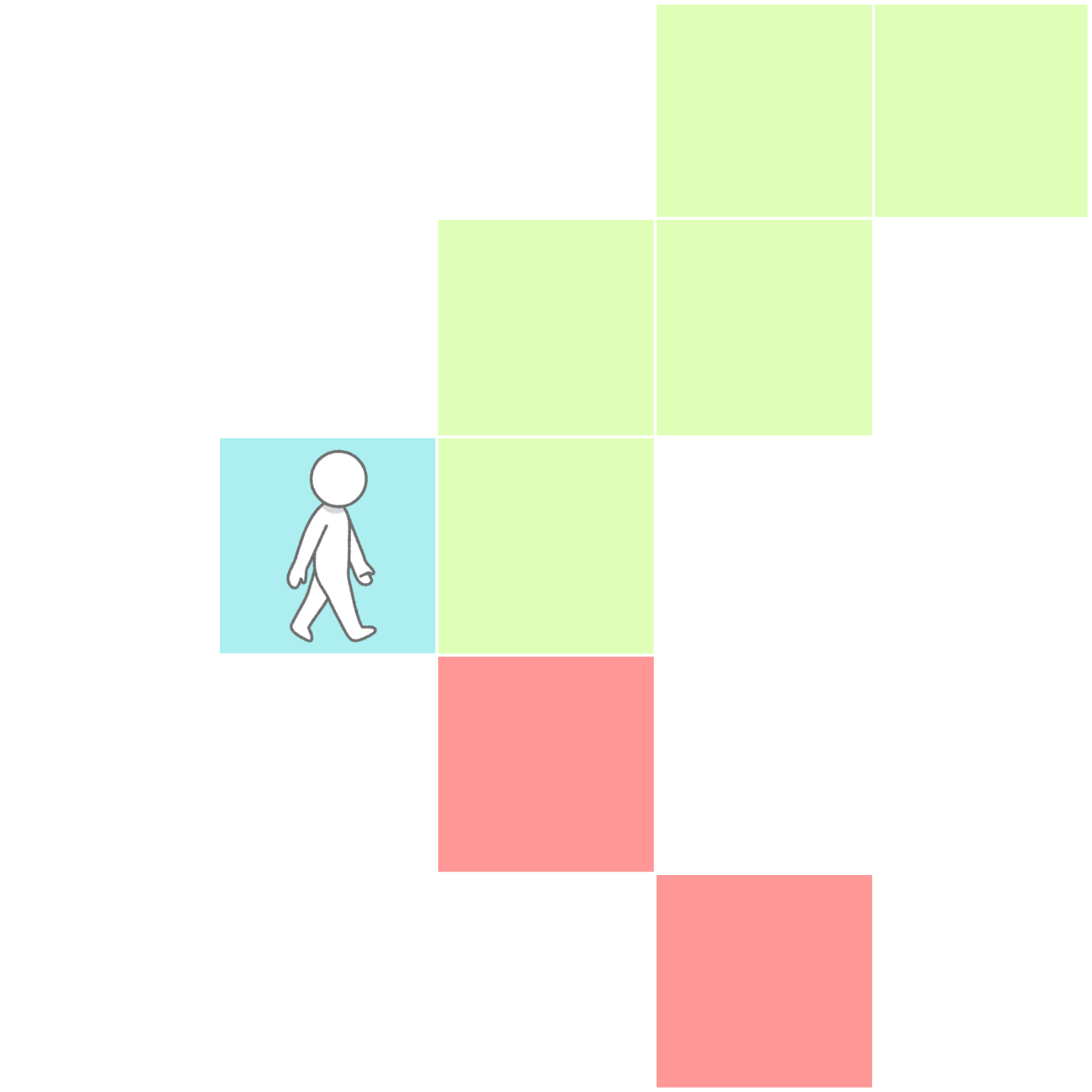
Combat takes place on a grid-based map. Movement is declared on the grid as described below.
- Each Tile = 1 Unit of Speed
- ✔ Movement is limited to tiles directly adjacent to one another.
- ✘ Diagonal movement does not skip over tiles.
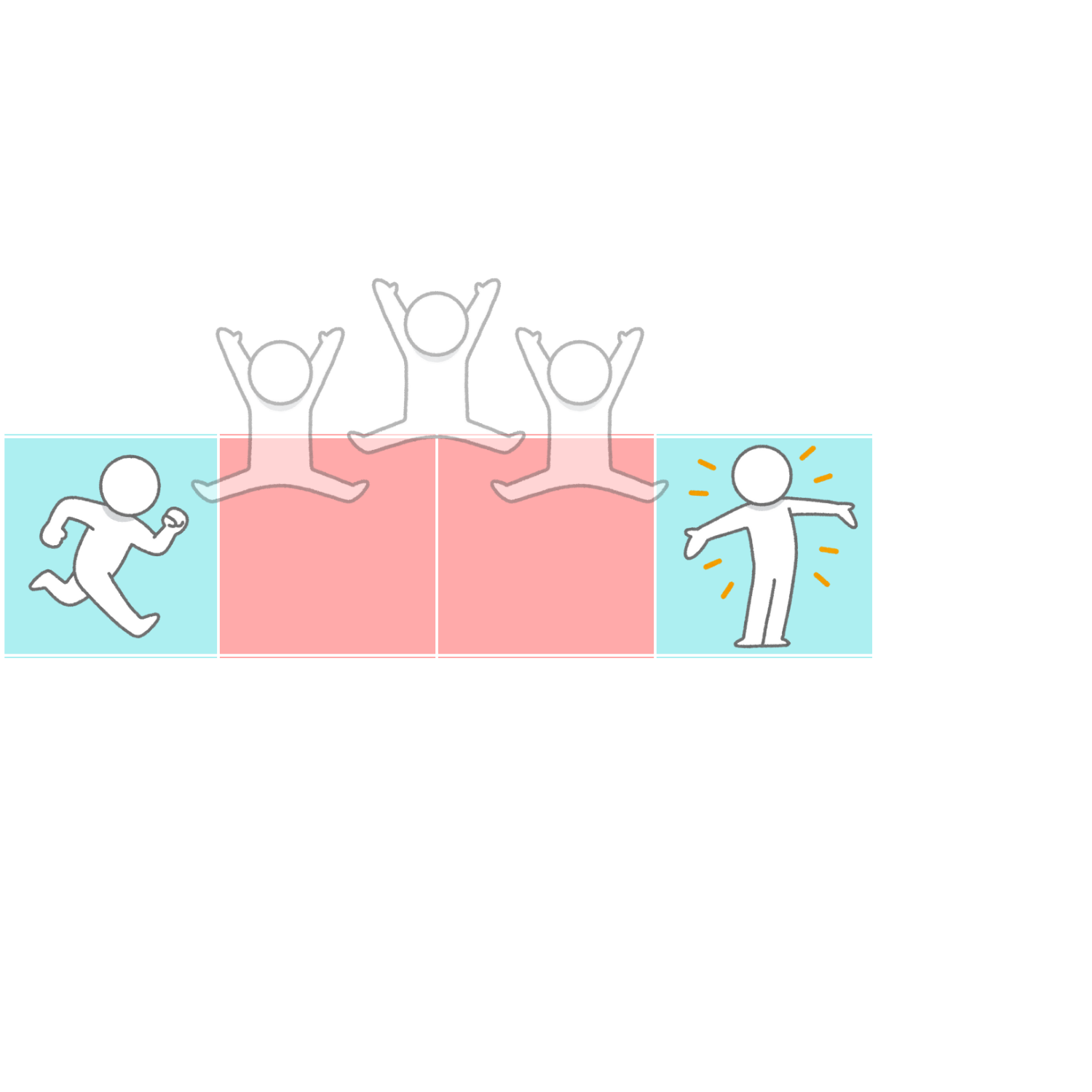
Jumping is an alternative to normal movement. It can be useful when trying to avoid Rough or Slippery terrain, or jumping over floor hazards.
- ✎ The maximum distance you can jump is half your Speed (rounded up)
- ✘ You cannot jump through an area if any space along the path is occupied.
Terrain Types
-
Firm: No movement penalties.
-
Rough: Each tile of Movement costs 2 Units of Movement.
-
Slippery: You can only move in one direction at a time; each turn you make will prompt a Reflex check.
-
Dark: There is no light. You are considered blind. (Blinded Condition)
-
Dim: Visibility is reduced. Awareness checks relying on sight are made with disadvantage.
-
Visible: Lighting is clear. Creatures and objects can be seen normally.
-
Blinding: Light is overwhelming. You are unable to see and automatically fail sight-based checks. Light can be directional, at the narrator's discretion.
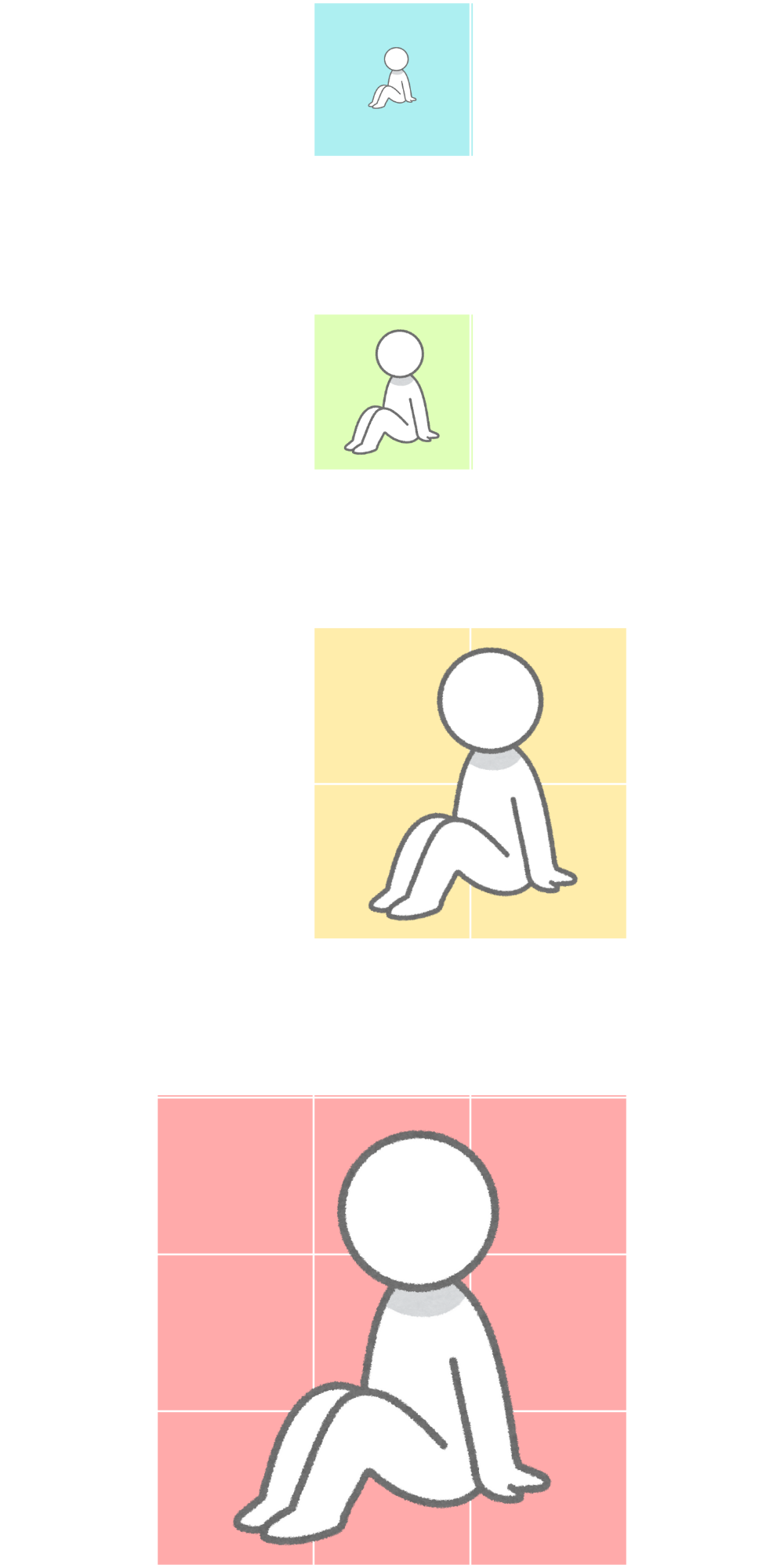
Size defines a creature’s "Hitbox" and affects rules like adjacency and AoE, which rely on measuring covered areas and nearby spaces. Understanding size interactions is essential.
Creatures can also not occupy the same space, this has only a few exceptions.
- Small [1 x 1]: While sharing their tile size with medium, small creatures do appear smaller, and CAN occupy spaces of large creatures and above with no penalty.
- Medium [1 x 1]:This is the standard tile size for most creatures, players should not exceed this size without the Narrator's express permission.
- Large [2 x 2]: Larger creatures, these will be your alphas of certain animals, or possibly a large mech. Whatever you need really
- Huge [3 x 3]: These should only be used to represent the biggest of the big, creatures that really aren't meant to be fought.
Creatures larger than huge should not have 1 solid "Hitbox" but should instead be assembled out of multiple smaller size categories (Head is Medium, Body is huge, wings are Large etc.)
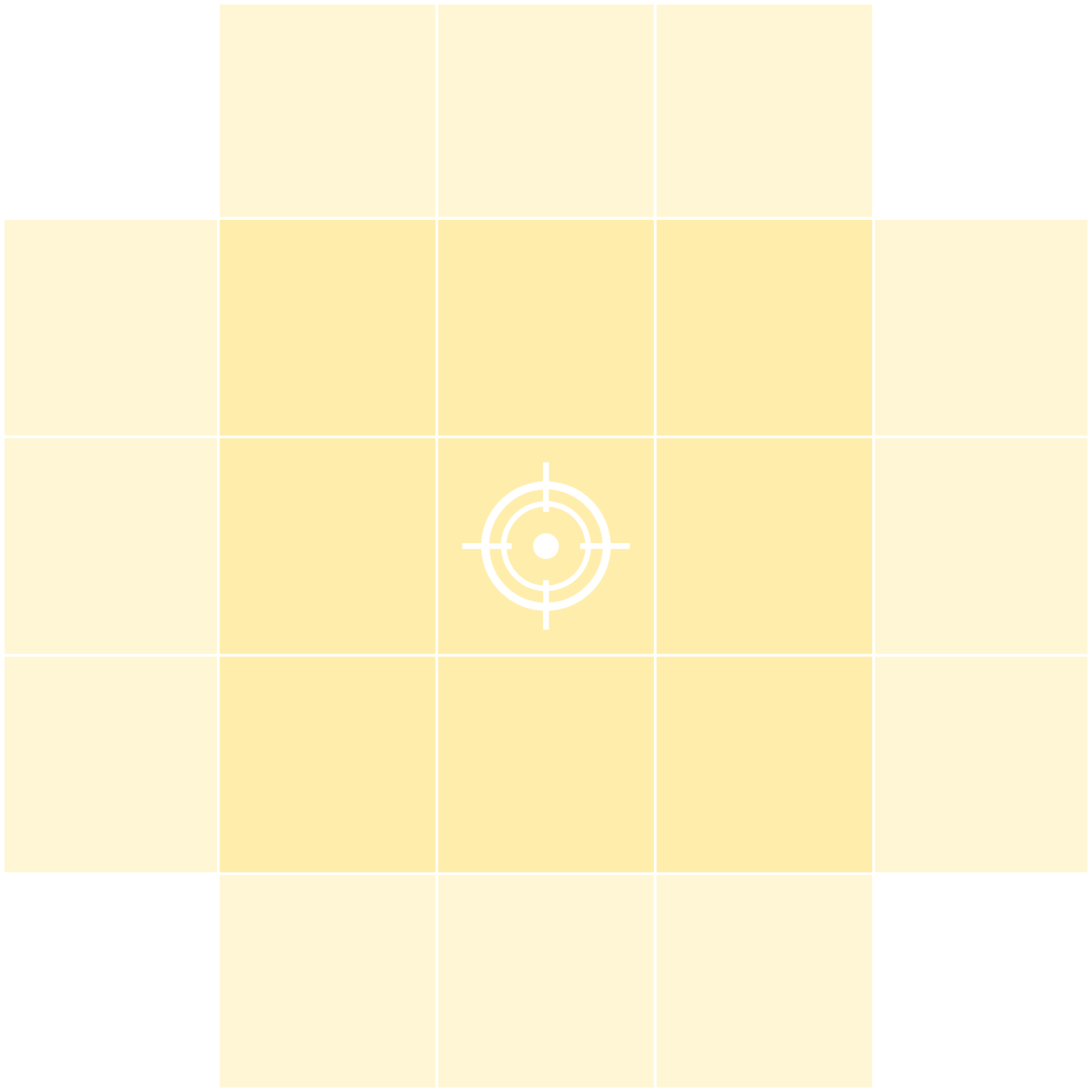
Certain spells and effects will specify a Radius which is useful for circular effects on a square grid —though using a ruler to draw a circle is often simplest.
- ✎ Radius will always start as an [3 x 3] square (1 unit radius), with each unit expanding by 1 tile outward, to tiles directly in contact with each other.
- Determining the size of the radius is as simple as starting with a square, then adding tiles on to it, as shown in the diagram.
- The center square is what needs to remain within range with certain spells or effects, it can also be centered on the caster of said effects.
Squares are simpler where it is simply specified a [A x A], the center of even squares should align with the lines on the grid.
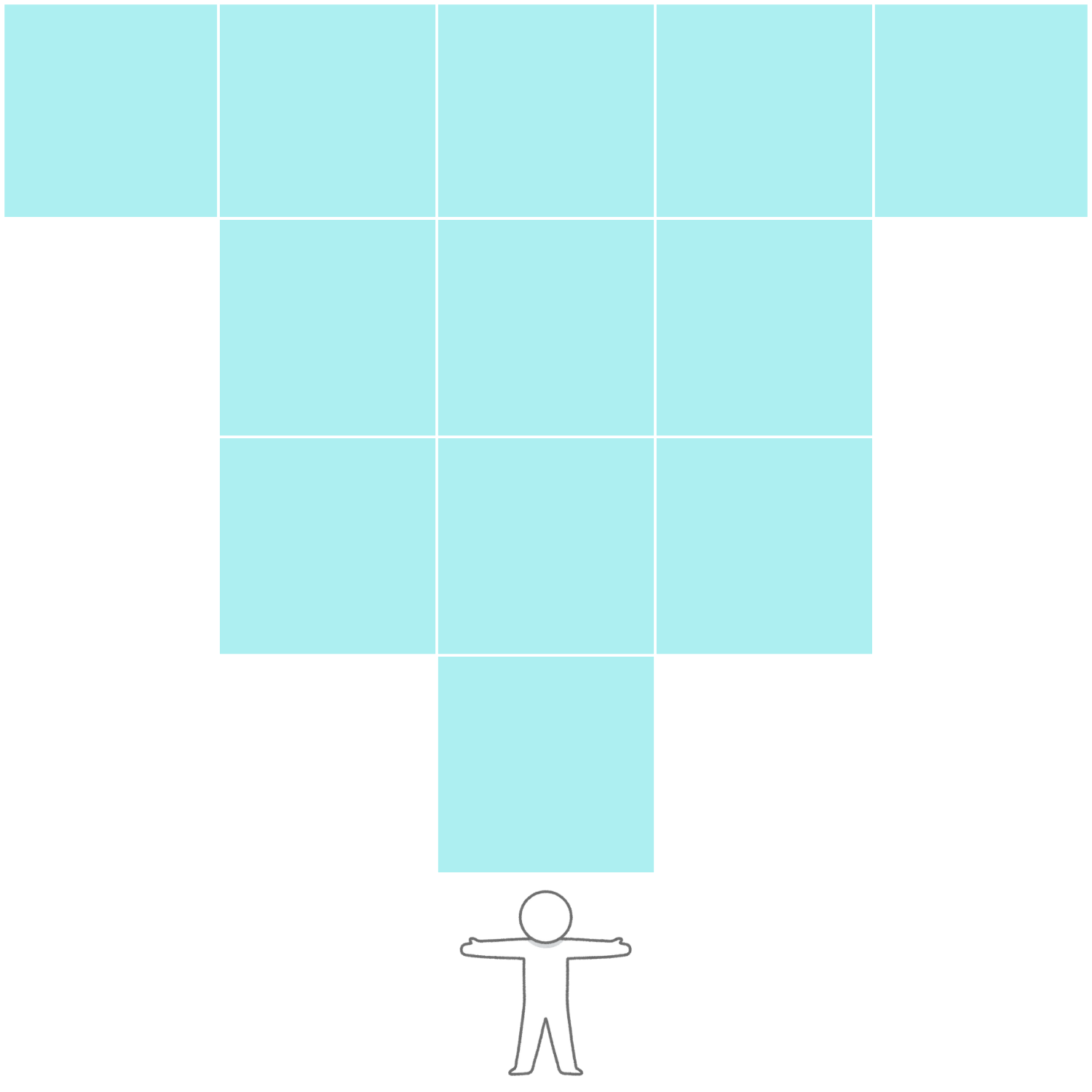
Certain spells and effects will specify a Cone, this is determined by the formulas below, however rulers and shapes can also be used to represent this.
- ✎ Cones are represented by a triangle of tiles, the Width of the cone is equal to half of the Height rounded down
- Cones will always be odd, and the "Center" of the cone aligns with the position of the caster.
- Cones can be diagonal, following the same rules just tilted.
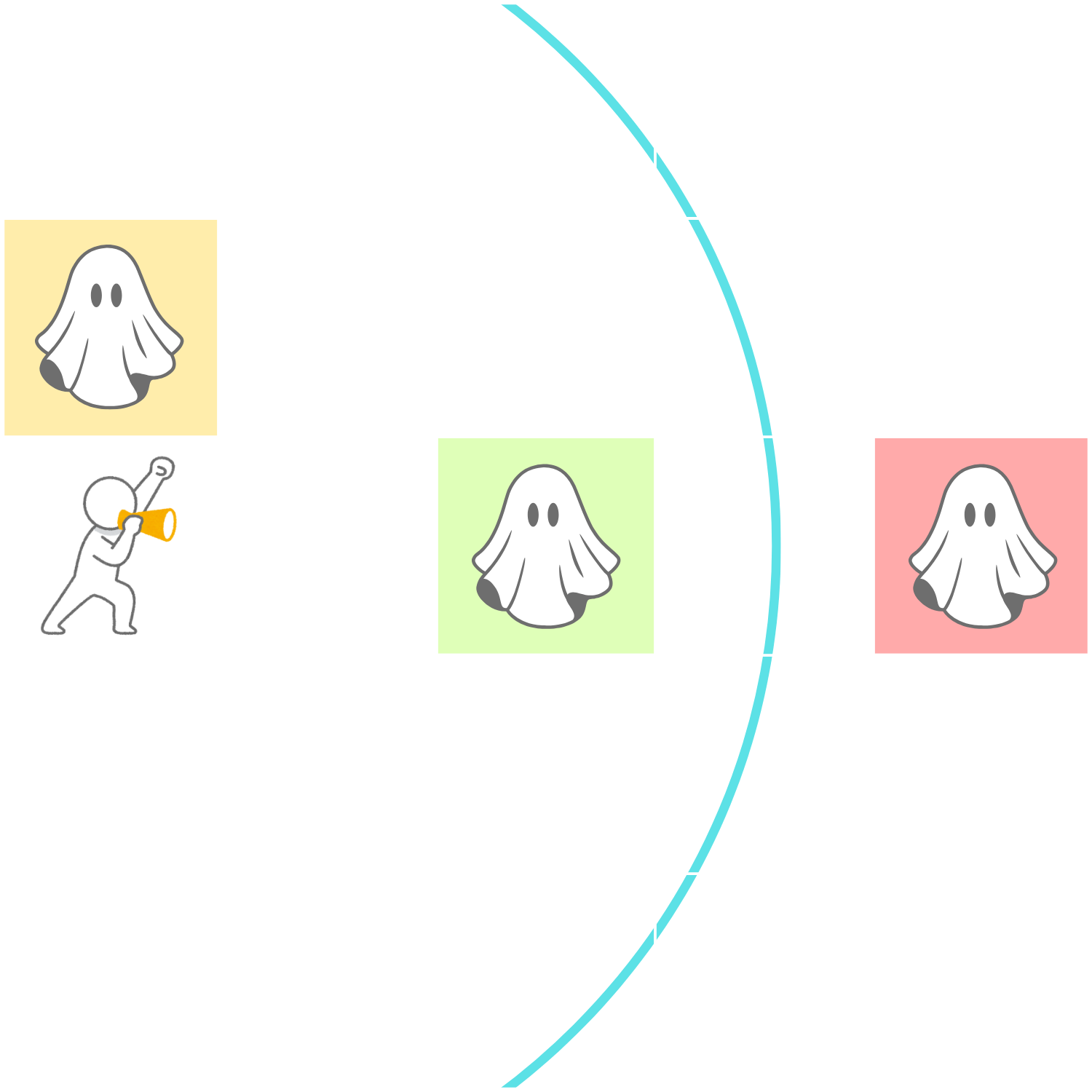
- ✔ Any creature within range can be shot at.
- ✘ Attacks beyond range automatically fail.
- ✎ Ranged attacks while adjacent to an enemy suffer Disadvantage
- Cover will impose penalties outlined in the Cover section below.
- Elevation may negate cover (Narrator ruling)
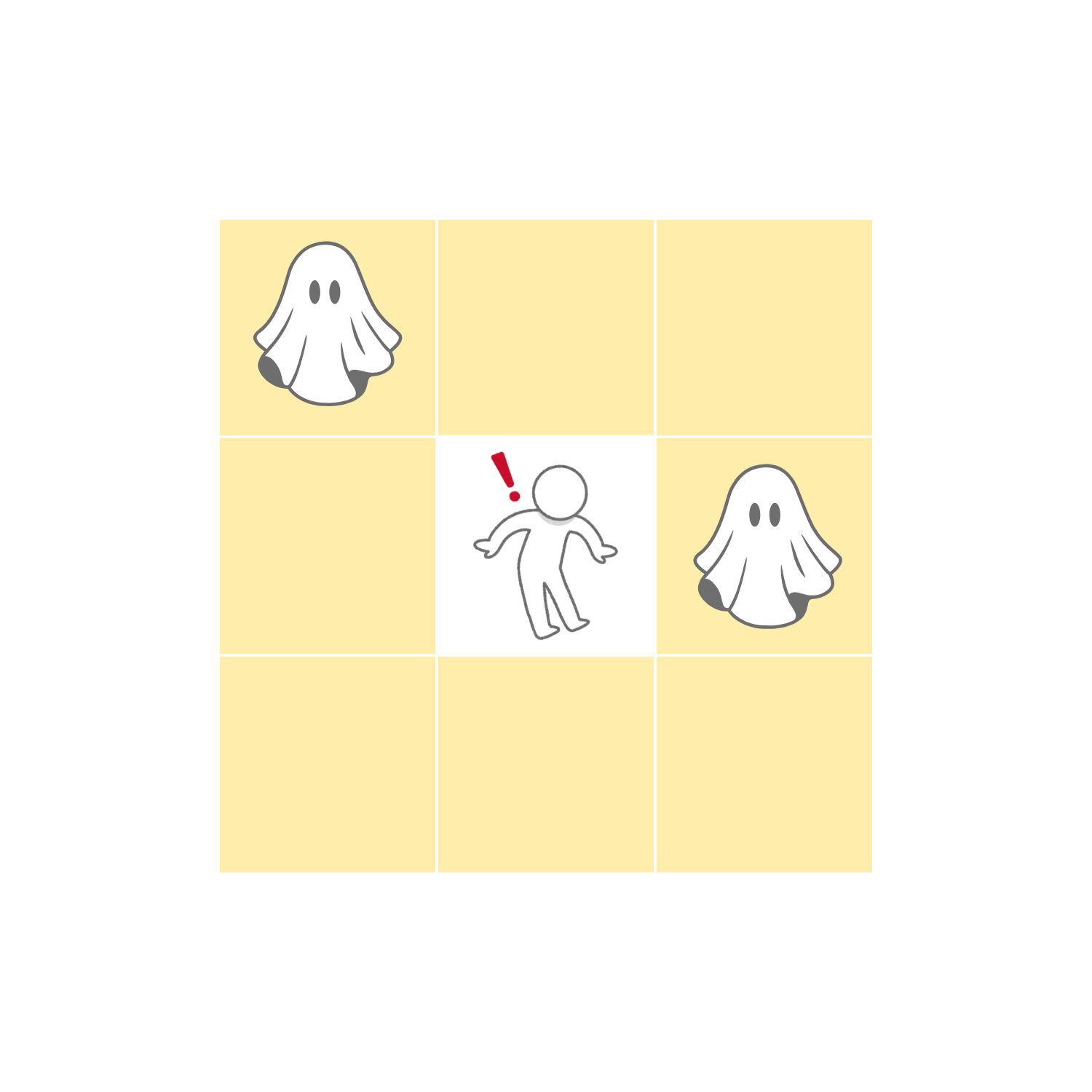
Adjacency is important when considering melee combat, aswell as ranged. Being adjacent to another creature might not think what you think it means.
- ✎ Creatures in a 1 unit radius around the target are considered adjacent, including diagonals
- Adjacent creatures are valid targets for melee attacks, including opportunity attacks, assuming they leave your melee range.
- ✎ Creatures count as an "Obstruction", which is considered Partial (Reinforced) Cover
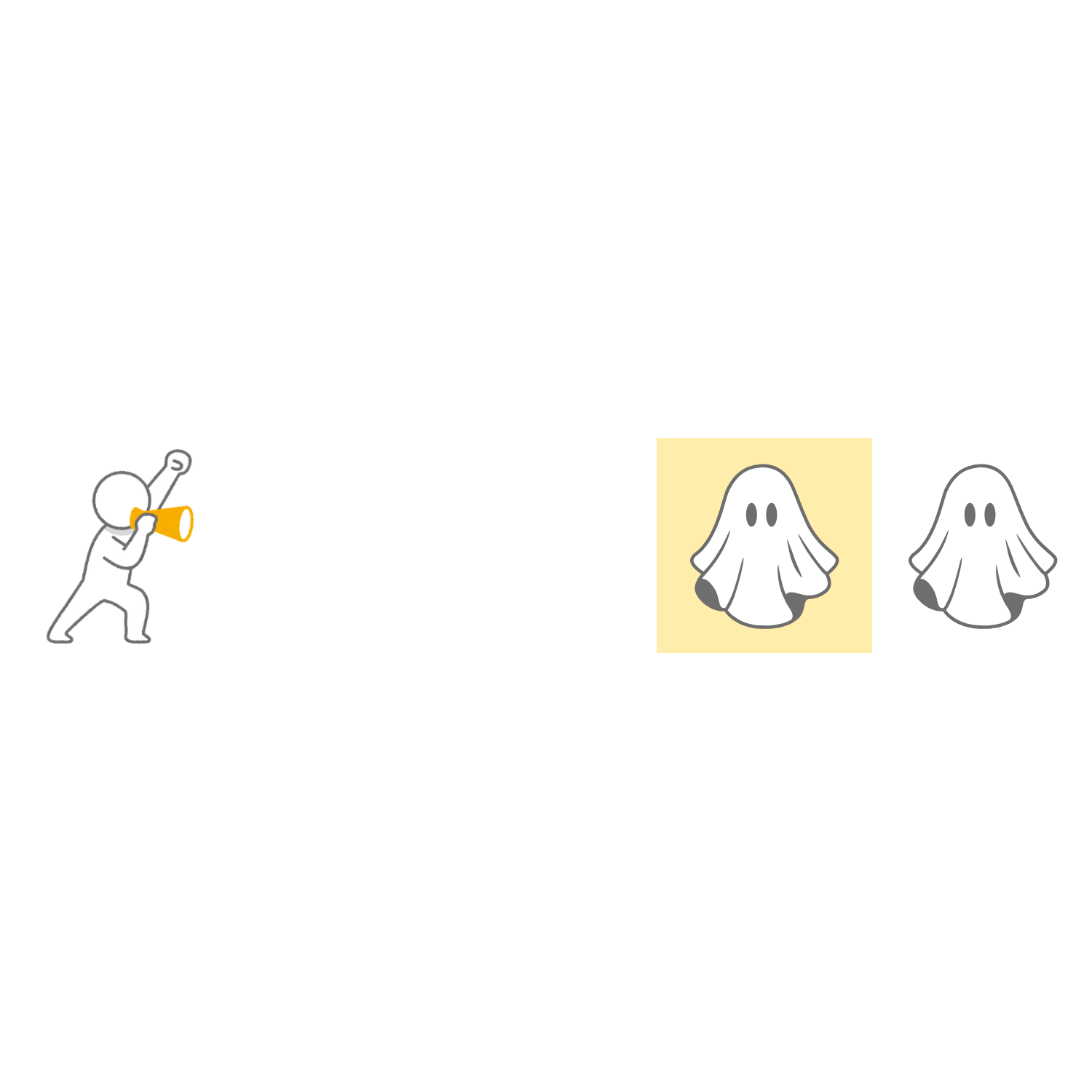
Cover
-
Partial (Flimsy / Sturdy / Reinforced): Aiming at targets behind this cover will impose a -1 to -3 penalty to the roll, depending on material and reinforcement.
-
Half: Aiming at targets behind this cover will impose disadvantage on the roll.
-
Full: You cannot aim at targets behind full cover (Some traits bypass this restriction.)
Cover is made of various materials and may have durability. It only applies to ranged attacks; melee attacks can damage the cover directly to reduce its durability. Narrator should track cover durability if used.
The Turn Structure
Scene: A scene represents one full cycle of all creatures’ turns. Once every creature has acted, the scene ends and a new one begins; a scene can be extended by Narrator choice.
Initiative: Determined by order of engagement and Narrator rulings. When a creature falls unconscious, it is moved to the bottom of the turn order until revived.
NPC Initiative: NPCs have a Turn Delay based on when they joined combat. The turn delay is specified in their stat block.
Ambush: When combat is initiated with an unaware target, the initiator acts before normal initiative or turn delay.
Opportunity Attack: When a creature leaves another creature’s melee range, the remaining creature may make a melee attack against it.
Each Turn = 2 Actions. Only 1 Attack per turn by default (some traits bypass).
Each Scene = 1 Reaction.
Held Action = You can hold 1 Action until your next turn, triggering it when a declared condition is met.
Attack Formulas
*Off-hand attacks use ONLY base stat score.
*If Proficiency is 0, attack is treated as Improvised
*Improvised weapons use only Might (melee) or Finesse (thrown) modifiers.
Companion Rules
Companions are creatures that fight, assist, or travel alongside a character. They are simpler than player characters and exist to support, not replace, player agency.
Companion Stat Block
The health of companions is determined by 2 metrics:
Crafted companions Health equals their Durability
Tamed companions Health equals the max health on their original stat block
Fixed value. Equaling 6 + Half your level (rounded down).
Armor bonuses can be granted with equipment for your companions, or traits you possess.
Companions only have 3 core attributes, Body, Mind and Skill.
Crafted companions have all of their stats set to 2, unless otherwise specified.
Tamed companions get these stats from their original stat block
Companions do not have Feats, Grace or Mana unless explicitly stated.
Companions can have Traits, this is determined by the Narrator. When taming a
companion,
some will have a "Tamed trait" on their sheet.
Damage & Death
Companion is incapacitated. Companions have 1 Final Blow resitance per Sleep.
Enemies may finish off companions as an Action. If a Blow is dealt with no resistance left, the Companion Dies.
Narrators are encouraged to treat companion deaths narratively, as if a player would die. Although work within reason, killing a pet cat is not a priority in combat.
Turn Order & Action Economy
- Companions act immediately after their controller
- Unconcious Companions will be moved to the bottom of initative.
Action Economy
- 2 Action per turn
- Can only make 1 Attack per turn.
- 1 Reaction per Scene
- Can make Opportunity Attacks
Issuing Commands
A companion only performs complex actions when commanded. Otherwise they will act within their natural instinct, or follow a previously issued command.
Attack, Move, Interact, Defend, or use a Special ability.
Follow, Stay or Retreat. Other smaller commands may fit here, Narrators Discretion.
Commands must be clear and reasonable, the Companion will always act to its best abilities to fulfill the command.
Companion numbers
- Only one active combat companion per character by default
- Having multiple companions is left to the Narrators discretion, either having to switch them out during rests, or allowing it.
- There are traits in place that allow multiple companions.
- Companions summoned from spells do not count against this total.
Conditions
Conditions represent ongoing states. Some stack, others persist until removed.
This condition stacks. When you take Poison damage, gain stacks equal to the damage taken. Each scene, one stack expires and deals 1 Poison damage while active.
This condition stacks. Each stack reduces healing by 1. One stack expires each scene.
This condition stacks. You lose 1 tile of movement per stack, cannot make reactions while you have any stacks, and all stacks expire next scene if not reapplied.
This condition stacks. Each stack reduces your actions per turn by 1; if reduced to 0, your turn is skipped.
Your movement becomes 0, attacks against you have advantage, and standing up costs half your movement.
Your movement becomes 0, attacks against you have advantage. Ending this condition depends on the type of restraints, though usually an Athletics check is required.
This condition stacks. Each stack grants 1 temporary Fatigue; one stack expires each scene, and Fatigue gained this way cannot be fatal.
This condition stacks. Each stack reduces damage dealt by 1; if an attack would deal 0 damage, it cannot be made. All stacks expire next scene if not reapplied.
You have disadvantage on attacks you make, and attacks against you gain advantage.
You are taunted by a creature, your next attack must target them. Including attacks of Opportunity, and this condition expires after the attack is made.
Each of your turns with this condition you will take 1 damage, it expires at the end of the Scene if it was not reapplied.
Your Movement is halved, it expires at the end of the Scene if it was not reapplied.
This condition stacks. Each stack reduces armor by 1; if you reach 0 Armor, all attacks automatically hit. Each Scene 1 Stack expires.
While you have this condition, every time you cast a spell roll [1d6], you must pay the result instead of the mana cost.
While you have this condition you must follow commands of the creature that charmed you (The commands cannot be harmful to you.), it expires at the end of the Scene if it was not reapplied.
While under this condition, you have -2 Finesse and -2 Scholarship.
While under this condition, you have -2 Reflex and -2 Insight.
While you have this condition, you must use atleast one movement action per turn to move away from the creature that fears you.
This condition stacks. Each of your turns you heal 1 health and reduce the number of Stacks by 1. The healing increases for each 4 Stacks.
This condition stacks. Each stack grants +1 to resisting Intimidation and Fear effects. Each time you attempt to resist this kind of effect a Stack Expires.
This condition stacks. Each Stack grants an additional Action on your turn. All stacks expire at the end of the Scene if not reapplied.
This condition stacks. You gain 1 tile of movement per stack, you can make 2 reactions as long as you have any stacks, and all stacks expire next scene if not reapplied.
This condition stacks. You gain 1 Armor per stack, one stack expires each time you take Damage.
As long as you have this Condition you cannot be Taunted.
While you have this condition you are immune to floor hazards, you can move up to your Movement in any direction, with a fixed height that is specified when the condition is granted.
Conditions may require checks, items, magic, or rest. Multiple stacks may be removed at once.
Mounted Combat
Mounts are trusted steeds or fancy rides, offering a helping hand to those that need, they are faster and stronger than your two feet, with the following rules you will learn how they can help you out in combat!
Mount Basics
Any creature capable of carrying a passenger can serve as a mount. Medium vehicles are also considered mounts, while large vehicles use full vehicle rules instead. While mounted, the rider and mount share the same tile, and the rider uses the mount’s Movement.
Initiative & Movement
While mounted, the rider and mount share an initiative slot. If the mount is unmounted, it acts on its own initiative, with non-companion mounts always acting last.
Mounting and dismounting each cost 1 Action. While mounted, the rider cannot take movement-based actions; instead, the mount’s Movement fully replaces the rider’s Movement. Mount-specific movement traits may still be used.
Attacking & Targeting
Melee attacks made against a mounted target suffer an Accuracy penalty equal to the rider’s Reflex. When attacking a mounted creature, the attacker must declare whether they are targeting the rider or the mount.
Area effects affect both rider and mount, while floor hazards affect only the mount. Opportunity Attacks normally target the mount; attackers with Reach may instead target the rider.
Creature Mounts
Creature mounts operate differently from Companions and have two stat profiles depending on whether they are currently mounted.
| Stat | Unmounted | Mounted |
|---|---|---|
| Health | Health | Morale (replaces Health) |
| Armor | 6 + Mount’s Body Score | 6 + Rider’s Reflex |
| Movement | Movement | Movement |
Morale
While mounted, a creature’s Health is replaced by Morale. Morale is set to the mount’s current Health at the moment it is mounted. Whenever the rider takes damage, the mount loses Morale equal to half the damage taken.
If a mount is targeted directly, it takes full Morale damage. The rider may spend 1 Action to Soothe the mount, restoring Morale equal to half the rider’s level.
When a mount’s Morale is fully depleted, it attempts to forcefully dismount the rider.
On a successful resist, the mount immediately recovers Morale equal to the rider’s Reflex. On a failure, the rider is dismounted, knocked Prone, and placed in an adjacent tile. The mount becomes Feared of the creature that caused the Morale loss and spends all movement fleeing.
While fleeing, the mount will obey commands to Hide or Seek Cover, but ignores all other commands.
Vehicle Mounts
Vehicle mounts use a fixed stat block that does not change while mounted and do not use Morale.
| Stat | Value |
|---|---|
| Durability | Repairable |
| Armor | Fixed Value |
| Movement | Movement |
Vehicles only lose Durability when targeted directly, affected by floor hazards, or through traits that consume Durability as a resource. An unridden vehicle is non-functional and acts as a combat obstacle.
Vehicle Combat
Vehicles are large, powerful, and often unwieldy. They have their own ruleset to reflect their unique nature on the battlefield.
Vehicle Types
Vehicles are categorized into three main types based on size, capacity, and complexity: Medium, Big, and Large. Each type has different rules for occupancy, grid space, and combat targeting.
Designed for 1 person, up to 2 people can ride. Occupies 1x1 tile on the grid. When targeting a medium vehicle, hit the rider as normal (roll against the rider's armor). These can be used as mounts, as mentioned in the previous section.
Designed for 4 people, up to 5 people can ride. Has 1 modification slot. Occupies 4x4 tiles on the grid. When targeting a big vehicle, hit any rider; roll against the vehicle's armor instead of the person's armor.
Designed for multiple people (5+). Has 2 modification slots. Occupies at least 6 tiles on the grid with a minimum width of 2. When targeting a large vehicle, hit any rider you can see; roll against the vehicle's armor instead of the person's armor.
Vehicle Stats
| Stat | Description |
|---|---|
| Durability | Represents the vehicle's structural integrity. It depletes through damage, and can be restored through repairs. |
| Fuel | Represents the vehicle's energy source. Fuel is consumed based on movement and actions taken. Running out of fuel renders the vehicle immobile until refueled. |
| Armor | A fixed value that represents how difficult it is to hit the occupants inside the vehicle. Big vehicles have 13 armor, and Large vehicles have 17. |
| Movement | Determines how many tiles the vehicle can move per turn. This is a fixed value based on the vehicle type but can be modified with upgrades. Medium: 6 tiles, Big: 10 tiles, Large: 8 tiles |
| Capacity | A fixed value representing the maximum weight that can be carried by the vehicle. |
Vehicles as Cover
Vehicles provide cover based on their size and construction. Medium vehicles offer Partial Cover. Big vehicles offer Half Cover to occupants and can block line of sight. Large vehicles provide Full Cover and may create areas of Total Cover depending on their bulk. Attackers must account for cover penalties when targeting creatures behind or inside vehicles.
Repairs
Repairs restore Durability and fix damage. Basic repairs require tools and time (e.g., 1 hour per 10 Durability restored) and may need a successful Crafting or Engineering check. Advanced repairs might require specific parts or magical assistance. Vehicles can be repaired during rests or in safe locations; emergency field repairs are possible but less effective.
Modifications
Vehicles can be modified to enhance performance or add features. Each vehicle type has a limited number of modification slots. Modifications require installation time and may cost resources. Examples include:
| Modification | Effect |
|---|---|
| Mounted Gun | Adds a fixed weapon that crew can fire as an action, dealing extra damage in combat. |
| Better Engine | Increases movement speed or allows special maneuvers like boosting. |
| Bigger Fuel Tank | Extends Fuel pool, reducing fuel consumption. |
| Music Speakers | Provides buffs to morale or distracts enemies with noise. |
| Shielding | Enhances armor or provides resistance to certain damage types. |
Vehicle Actions
| Action | Description |
|---|---|
| Move | The vehicle moves up to its Movement speed in tiles. Movement can be in any direction but may be restricted by terrain. |
| Deploy Equipment | Activate a modification, such as deploying spikes, releasing smoke, or using special features. Costs an action and may have cooldowns. |
Narrator Rules
Rules and Advice for Running the Game
Overview
The Narrator leads the story. You present the world, control its forces, and guide the flow of events while the players shape outcomes through their choices. You are the final authority on rules, rulings, and narrative direction.
Your responsibility extends beyond mechanics. You maintain tone, fairness, and player safety. Conflict between characters may enrich the story — conflict between players does not. Protect the table’s enjoyment and keep the experience collaborative.
System Familiarity
Familiarize yourself with the core mechanics before running a session. You are not expected to memorize everything, but you should understand how the system flows. Checking the rules mid-session is acceptable, and players should be encouraged to know their own abilities.
Starting Resources & Equipment
Determine what resources characters begin with. Early equipment influences the tone and difficulty of the first several sessions. Choose one of the following approaches, or combine them:
- Starting Funds: Provide an appropriate amount of currency based on your setting. Players purchase their own gear within reason.
- Starting Gear: Provide a predefined loadout. A typical baseline includes light or medium armor, one proficient weapon, modest funds, and essential supplies.
Tools & Tool Proficiencies
Tools enhance specific featss. You may define toolsets for any feat category. Tools typically grant a +1 to +3 bonus when appropriately applied.
Tools are defined by purpose rather than base feat (e.g., Brewing Tools, Crafting Tools). Characters gain tool proficiencies through traits, and may begin play with tools they are proficient in at your discretion.
Creature Taming
Characters may attempt to tame creatures when the narrative allows it and required checks are met. The difficulty, time, and risk depend on the creature’s nature.
Small or docile creatures may require patience and care. Dangerous creatures carry real risk. Combat effectiveness with tamed creatures is typically restricted to characters with appropriate traits.
Multiple effects may modify the same stat or apply similar bonuses and penalties. To prevent confusion, all modifiers are resolved in a fixed order. This ordering ensures consistency and balance when many effects overlap.
| Modifier Type | Examples |
|---|---|
| 1. Paths | Path traits that directly modify stats. |
| 2. Traits | Character traits that provide bonuses or penalties. |
| 3. Spells / Items / Crafts | Temporary effects from magic, equipment, or crafted items. |
| 4. Conditions / Battlefield Hazards | Ongoing effects from conditions or environmental factors. |
Example: Modifying Movement (Base 5)
Path effects apply first. Example: “Lose 1 Movement Movement, gain 2 Damage.” 5 → 4
Traits apply next. Direct reductions modify the stat immediately.
If a trait applies stacks (such as Slow), those stacks resolve later
under Conditions.
4 → 2 (if reduced by 2)
Temporary or external modifiers apply after Traits.
Example: Boots granting +3 Movement.
2 → 5
Ongoing conditions resolve last. Example: Rough terrain halves movement when moving through it. Final calculations are based on the fully modified value.
Whenever a player attempts an action with uncertain outcome, assign a CS (Challenge Score) based on how difficult the task is. This applies to physical feats, knowledge checks, environmental interaction, and social encounters.
| Difficulty | CS Range | Description |
|---|---|---|
| Trivial | 4 (±2) | Easily accomplished by anyone with basic competence. |
| Easy | 6 (±2) | Requires some effort or skill, but generally achievable. |
| Standard | 8 (±2) | A reasonable challenge for a competent character. |
| Difficult | 10 (±2) | Requires significant skill, preparation, or luck. |
| Hard | 12 (±2) | A formidable challenge that may require multiple attempts or creative solutions. |
The ±2 range allows you to slightly adjust within a tier depending on context, preparation, tools, advantages, or narrative positioning.
Social Interactions
Social encounters should default to roleplay first. If discussion and character interaction reasonably resolve the situation, no roll is needed. Rolls are used when outcome is uncertain or contested.
When a roll is required (Persuasion, Deception, Intimidation, etc.), determine the base CS from the difficulty table, then apply modifiers.
| Difficulty | CS Range | Description |
|---|---|---|
| Trivial | 4 + Target Insight ± Reputation Modifier | Non controversial statements, simple requests, or obvious truths. |
| Easy | 6 + Target Insight ± Reputation Modifier | Simple but not trivial interactions, such as making a polite request. |
| Standard | 8 + Target Insight ± Reputation Modifier | Convincing someone to act in a way that is not obvious or straightforward. |
| Difficult | 10 + Target Insight ± Reputation Modifier | Actively convincing someone to do something they are reluctant to do. |
| Hard | 12 + Target Insight ± Reputation Modifier | Asking a near impossible request, or something they are unwilling to do. |
Reputation reflects how the target perceives the character. Positive reputation may lower the effective difficulty, while hostility or distrust may increase it.
Campaign Preparation
Before the first session, establish the structural foundations of your campaign. Players should understand the tone, themes, and expectations of the world they are entering.
- World Framework: Define the setting’s stability, magic presence, and political or cultural tensions.
- Tone & Boundaries: Clarify narrative tone and establish player safety expectations.
- Character Integration: Ensure each character has a reason to exist within the world and alongside the party.
- Core Conflict: Introduce a central tension, threat, or mystery that drives early engagement.
Worldbuilding & World Preparation
Strong campaigns are built on strong preparation. Whether your story spans three sessions or thirty, a well-prepared world allows you to respond confidently to player decisions.
Preparation creates structure and a framework for your improvisation. It is not a script to be followed rigidly, but a foundation to support player agency.
1. NPCs
Even minor NPCs require at least minimal preparation. Players frequently ask for names, occupations, personalities, and motivations. Keep a quick-reference list for on-the-spot NPC creation: names, traits, quirks, and basic goals.
2. Quests
Quests form the backbone of the campaign. Prepare small jobs, side objectives, and at least one guiding main questline. Whenever possible, connect quests together — logically or unexpectedly.
Example: Saving a lost cat → Witnessing a crime → Exposing a larger conspiracy. Interconnected threads make the world feel reactive and alive.
3. POIs (Points of Interest)
For every new location, prepare at least as many Points of Interest as there are players. Include expected locations (shops, taverns, guild halls) and any quest-relevant sites.
3.a. Layout
Placement matters. Cities develop with logic. Shops cluster together. Taverns gather near social centers. Political buildings occupy secure positions. Design settlements with believable structure.
4. Loot Tables & Inventory Lists
Prepare loot in advance. Empty chests and empty stores weaken immersion.
- Chests: Create rollable tables for randomized rewards.
- Stores: Prepare inventory lists with expected and minimum prices.
Expect players to haggle. Remain realistic. Avoid giving items away freely, as it can encourage unhealthy table dynamics.
5. Random Events
During travel or rest, use themed random event tables. Allow players to roll when appropriate. Refresh these tables periodically to maintain variety.
Avoid placing highly lethal outcomes in general travel tables unless the region is explicitly dangerous.
6. Improvisation
No preparation can account for every player decision. Learn to adapt.
Preparation provides support, but flexibility sustains the campaign.
Languages
The core system includes pre-made languages, but you may create additional ones to better reflect your setting. This section concerns how languages function within your world — not how they are designed.
Not every nation, settlement, or species speaks the same tongue. Consider the dominant populations in each region and assign languages accordingly. A village butcher may struggle with Common yet speak fluent Eldar. Small distinctions like this make the world feel lived in and reward characters who invest in diverse languages.
Languages may also be used privately. Characters can communicate in a language unknown to others at the table, allowing secrecy within guilds, professions, factions, or between specific party members.
Session Preparation
Sessions should be open ended, having multiple potential paths and outcomes. Prepare key elements to support player actions, but be ready to improvise and adapt your plans. It's important to keep a cool head even if your players ignore everything you have planned.
- Primary Objective: A clear focus or situation for the session.
- Secondary Hooks: Optional leads or branching opportunities.
- NPC Motivations: What important figures want and how they act.
- Mechanical Preperations: Relevant stat blocks, CS values, and environmental effects prepared in advance.
- Player Resources: Anticipate what tools, traits, or spells players might use and prepare accordingly.
- Flexibility: Be ready to pivot if players take unexpected actions.
- Session Flow: Consider how the session might progress and prepare for key moments, but allow player choices to shape the narrative.
Consider pacing. Balance exploration, interaction, and mechanical engagement. Avoid prolonged stagnation unless tension is intentionally building.
During prolonged travel, extended rest, or narrative time skips, characters may engage in structured downtime activities. Downtime rewards investment of time, it should feel as such, not as a shortcut. Here are a few downtime activities to consider, but feel free to create your own based on the needs of your story and characters.
1. Potions & Crafting
Brewing potions or crafting items during downtime guarantees success, provided the character commits hours equal to the potion or item’s normal CS requirement. No roll is required when sufficient uninterrupted time is invested.
Crafting still requires all environmental and material prerequisites. Complex crafts may require a furnished workshop, specialized tools, assistants, or rare materials. Downtime removes the roll — it does not remove logistical requirements.
Recipes: Written potion recipes may be learned freely if documented. Discovering new potion recipes requires Hard CS experimentation checks (one per ingredient used). Crafting recipes cannot be discovered through experimentation — they must be learned from blueprints or traits.
2. Spells
Spells may be learned from scrolls, spellbooks, or appropriate sources. Learning requires a minimum of 4 hours per spell level.
- The spell’s level must already be unlocked.
- The character must possess sufficient mana to cast it.
- Cantrips require only 2 hours but demand a successful Difficult Arcana check to commit to memory.
3. Traits
Rare training manuals may allow characters to learn new traits. All normal prerequisites must still be met.
Learning a trait requires 10 days per trait point. Certain traits (Narrator’s discretion) may be learned without manuals, but never without meeting their listed requirements.
4. Proficiencies
Characters may train with unfamiliar weapons or refine existing proficiency. Training requires at least 4 hours per day for 7 consecutive days to increase proficiency by 1 point.
The proficiency gained corresponds to the weapon type trained with.
5. Languages
Languages may be learned with access to proper teaching literature. Study requires 3 hours per day for one full month.
Each additional month of study increases Language Score by 1 (1 → 6). At 6, the character is considered fluent.
Combat-ready NPCs require structured stat blocks to function within initiative, damage resolution, and the Effect Stack. Use the framework below to build balanced encounters quickly and consistently.
NPC Statblock Template
NPC Builder
Attributes:
Defences/Weaknesses:
Spellcasting:
Movement
Determines movement in tiles. Follows normal player movement rules. Average ranges: Slow ~3, Moderate ~5, High ~7.
Health
1. Calculate total party health [H].
2. Select encounter difficulty pool:
| Difficulty | Formula | Description |
|---|---|---|
| Easy | 0.5 × H | Suitable for minor threats or skirmishes. |
| Moderate | 1 × H | Balanced for standard encounters. |
| Hard | 2 × H | Challenging fights that test player resources. |
Distribute evenly among combatants. Allies receive equal HP but do not count toward division.
Armor
Select using the CS difficulty scale according to desired encounter challenge.
Turn Delay
Fixed: Acts after X player turns at combat start.
Recursive: Acts every X player turns.
Action Number
Number of actions taken each turn.
Attributes
NPCs use base Attributes instead of feats: Bopy (Melee), Skill (Ranged), Mind (Spells).
Distribute 4 total points. +2 if primary/boss target. -2 if weak/swarm enemy.
Weaknesses, Resistances & Immunities
Assign narratively. Represents how a creature’s biology, magic, or nature interacts with different damage types.
| Type | Effect | Example |
|---|---|---|
| Weakness | Takes 50% more damage from specified type. | Skeletons weak to Blunt damage. |
| Resistance | Takes 50% less damage from specified type. | Fire elementals resistant to Fire damage. |
| Immunity | Unaffected by specified type. | Golems immune to Poison damage. |
Abilities & Actions
List all attacks and traits. Assign traits totaling 0.5 × their Health (in trait points).
Spells
- Atk. Bonus = Mind
- Dmg. Bonus = Mind/2
- Spell CS = 5 + Mind
- Number of spells = 0.5 × Health (cantrips included)